Winterizing Your Car for a Texas Freeze: Tires, Batteries and Coverage
Texans are used to heat. Freezes are a different story. They do not happen often in much of the state, which is exactly why they cause so much trouble when they do. Roads ice over, batteries die, pipes burst, and drivers who have never handled black ice find themselves sliding toward a guardrail.
Winter Storm Uri in February 2021 was a hard reminder of how disruptive a deep freeze can be. A little preparation each fall goes a long way.
Start with the battery
Cold weather reduces a battery’s ability to deliver power, and Texas heat shortens battery life in the first place. Many batteries that survived summer are weaker than they look.
- Get it tested. Most auto parts stores test batteries for free.
- Replace it if it is old. Batteries in hot climates often last only three to four years.
- Clean the terminals. Corrosion reduces power delivery.
- Carry jumper cables or a portable jump starter.
Check your tires
Tires matter more on icy roads than almost anything else.
- Tread depth. Worn tires lose grip fast on ice and slush. Use the penny test, or better, a cheap tread gauge.
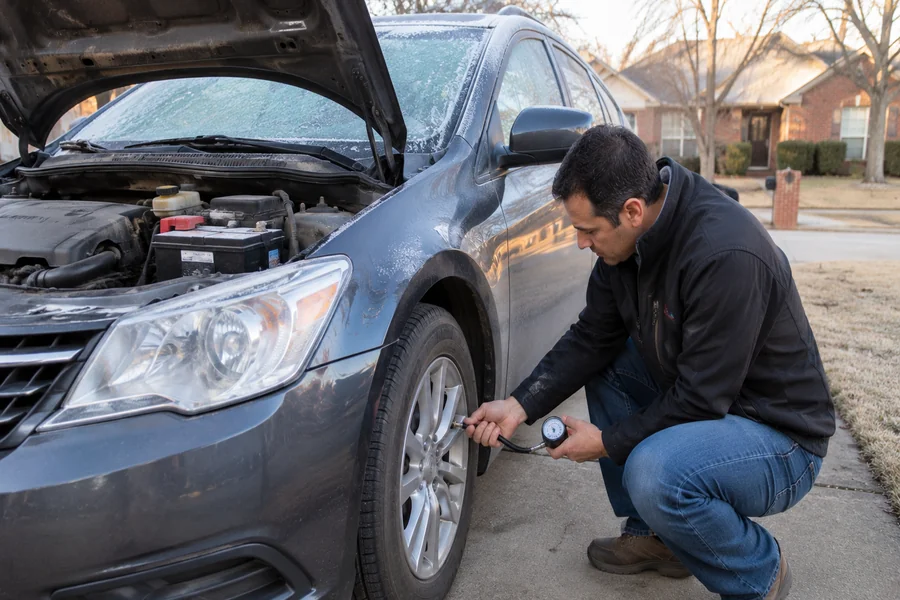
- Pressure. Tire pressure drops roughly one to two PSI for every 10°F drop in temperature. Check it when a cold front arrives.
- All-season vs winter tires. Most Texans do not need dedicated winter tires, but if you live in the Panhandle or travel north often, they can be worth it.
Fluids and wipers
- Antifreeze. Make sure the coolant is the right mix for freezing temperatures.
- Washer fluid. Use a winter formula that will not freeze.
- Wiper blades. Replace them if they streak. Ice and road grime wear them quickly.
- Oil. Check the owner’s manual. Some cars recommend a different viscosity in cold weather.
Build a winter car kit
Even short trips can turn into long waits if roads close.
- Blanket and extra warm clothes
- Water and snacks
- Phone charger or power bank
- Flashlight
- Ice scraper (a plastic card works in a pinch, but buy a real one)
- Small shovel and kitty litter or sand for traction
- First aid kit
Driving on ice
Most crashes in a Texas freeze happen because drivers treat icy roads like wet ones.
- Stay home if you can. It is the single best advice during ice events.
- Slow down a lot. Stopping distances on ice can be several times longer.
- Watch bridges and overpasses. They freeze first. Texas has many of them, especially in the big metros.
- Brake gently. Hard braking causes skids.
- If you skid, steer where you want to go and ease off the gas.
- Leave extra space between you and the car ahead.
The National Weather Service issues winter storm watches and warnings for Texas, and checking it before you drive is one of the easiest ways to avoid getting caught out.
Park smart before a freeze
- Park in a garage if you have one.
- Avoid parking under trees heavy with ice.
- Keep your gas tank at least half full to prevent fuel line issues and to have heat if you get stuck.
Check your insurance coverage
Winter damage to your car usually falls into two categories:
- Collision pays if you slide into another car, a pole, or a guardrail.
- Comprehensive pays for non-crash damage, such as a tree limb falling on your car under the weight of ice.
If you only carry Texas’s minimum liability coverage of 30/60/25, neither of these is included. Liability pays for damage you cause to others, not to your own car.
For many drivers, full coverage, meaning liability plus collision and comprehensive, is worth it, especially on a newer or financed car. If you are trying to find the cheapest full coverage car insurance in Texas, compare quotes from several companies with the same deductibles and limits, and ask about discounts for safe driving, bundling, or paying in full.
Also look at:
- Roadside assistance, which can cover towing or a jump start
- Rental reimbursement, in case your car is in the shop after a winter crash
- Your deductible, and whether you can afford it in a bad month
After a freeze
Once the ice melts, check for:
- Tire damage from potholes, which multiply after freeze-thaw cycles
- Cracks in the windshield, which can spread with temperature swings
- Fluid leaks under the car
The short version
Texas freezes are rare enough that people forget to prepare, and serious enough that they cause real damage when they hit. Test your battery, check your tires, stock a kit, learn to drive slowly on ice, and make sure your insurance actually covers your own car. A couple of hours in the fall can save you a lot of stress in February.