What Home Additions Actually Deliver for a Family in Bucks County
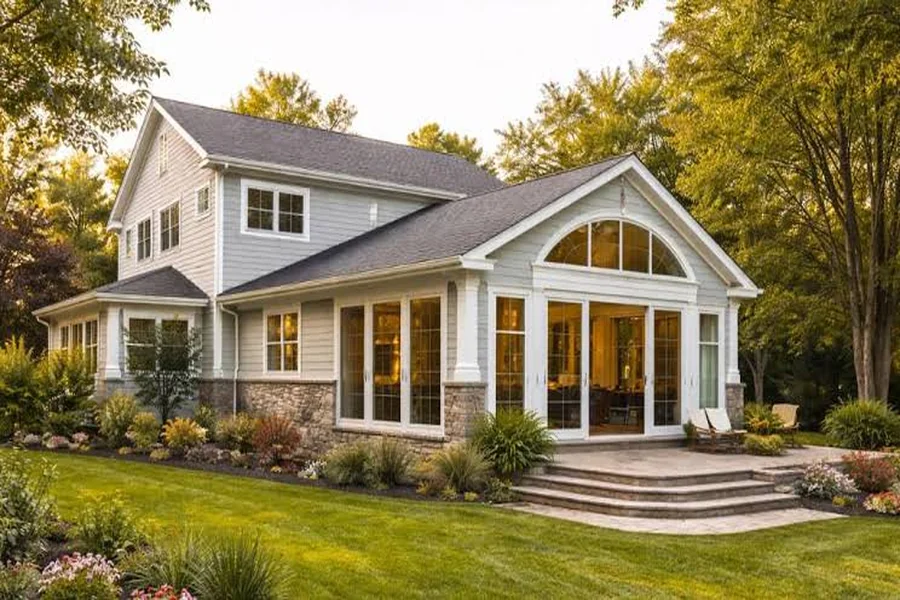
Seventy percent. That is the rough share of American households that own the home they live in, according to the U.S. Census Bureau, and it explains a question I hear constantly around here: do we move, or do we build? The answer usually turns on one thing nobody talks about at the dinner table. Moving doesn’t just cost you a realtor’s cut and a truck. It costs you the street you already know, the neighbors who watch your dog, and the twenty minute commute you spent years getting right. That is why so many families in Doylestown, Yardley, and Newtown end up putting an addition on the back of the house instead of a For Sale sign on the lawn.
Here’s the promise of this piece. By the end you’ll know how to size an addition the right way, what the money really goes toward, and the four questions that separate a smooth build from a nine month headache. I’ve watched enough of these projects from the driveway to have opinions, and I’ll share them without hedging.
Why Stay and Build Instead of Moving
Run the math on both options before you fall in love with either one. Selling and buying means closing costs on two transactions, moving expenses, and in most cases a higher mortgage rate than the one you’re holding. Your kids change schools. Your commute gets longer. You also pay more for a house that still isn’t laid out the way you want.
An addition keeps your address and your rate. It also lets you fix the actual problem, which is almost never “we need more square footage.” It’s “we need a bathroom that two people can use at once” or “we need somewhere to put the noise.” Those are different projects, and naming yours correctly saves real money.
My honest take: if you love your lot, your street, and your school district, build. If two of those three are shaky, move. Renovating a house you don’t want to live in is an expensive hobby.
How Much House Do You Actually Need
This is where homeowners overshoot. A twenty by twenty addition sounds modest until you picture it furnished, and then you realize you just built a room you walk through twice a day. Start with the friction points in your current routine.
- Morning bottleneck: one bathroom, four people, a 7:15 departure
- Work from home: a dining table that becomes an office and never goes back
- Storage creep: coats on chairs, shoes by the door, a garage you can’t park in
- Guest overflow: in laws on an air mattress in the living room every December
Each of those points to a different build. If the schedule is the problem, you want a primary suite with its own bath. If it’s the table, you want a dedicated office with a door that closes and a window that actually faces something. A home office addition typically runs six to eight weeks in the trades, while a primary bath and bedroom expansion lands closer to four to six weeks once the shell is up. The size question answers itself once you name the friction.
The Money Conversation Nobody Wants to Start
Additions get priced by the square foot, and that number moves with three things: how much plumbing and electrical you’re pulling into new space, how complex the roofline is, and how hard it is to tie the new structure into the old one so it doesn’t look bolted on.
Plan on a contingency of ten to fifteen percent, and don’t let anyone talk you out of it. Old houses hide surprises behind drywall, and this county is full of old houses. A foundation that needs reinforcement, knob and tube wiring that has to go, a beam that isn’t where the drawings said it was. None of that is anyone’s fault. All of it lands on your budget if you didn’t plan for it.
Financing usually comes from a home equity line or a cash out refinance, and the federal Department of Housing and Urban Development is the place to start reading before you sign anything with a lender. Ask about draw schedules too. You want money released as milestones get hit, not all at once on day one.
Design Decisions You Will Live With for Twenty Years
Windows and orientation matter more than the faucet you spent three weekends choosing. South facing glass gives you free heat in January and glare in July unless you plan the overhang. A mudroom on the path your family already walks beats a beautiful one on the path an architect imagined. And hallway width is the one place you should spend extra, because every piece of furniture you own has to get through it eventually.
Think about the next twenty years, not the next two. A first floor bedroom and a no threshold shower cost less to build now than to retrofit later. Even if nobody needs them today, a house that can absorb a change in circumstance holds its value better when you sell. Buyers in this market read floor plans the way they read inspection reports, and they notice flexibility.
Energy decisions are part of the same conversation. Tight building envelopes, right sized mechanical systems, and efficient windows are worth the upgrade, and the ENERGY STAR program publishes straightforward guidance on what actually moves the needle versus what is just marketing. I’d rather cut a skylight than skimp on insulation. Skylights leak on a schedule. Insulation just works.
A Short Checklist Before You Hire Anyone
Four questions, asked in this order, will filter your list fast.
- Who draws the plans, and do they work for you or for the builder? Design build means one team owns the drawing and the framing, which removes the finger pointing when something doesn’t line up.
- Can I walk through a project you finished two years ago? Not a photo gallery. A driveway visit. Ask that homeowner what the schedule looked like in month three.
- What is excluded from this number? Permits, engineering, dumpsters, and finish allowances are the usual hiding spots.
- Who is my point of contact, and how often do I hear from them? Weekly updates with photos beat a phone call when something has already gone sideways.
This is also where local experience pays off in ways that are hard to fake. Bucks County has its own permitting rhythms, its own inspectors, and its own architectural character, and a builder who works here every week knows which township wants what on the drawings. When you compare bids, read them against each other line by line, not by the total at the bottom. A low bid with vague allowances is a higher bid wearing a costume.
If you’d rather hand the whole thing to one team that designs and builds under one roof, Irwin Build home additions in Bucks County is worth a conversation, especially if your project touches both the plan and the permit process.
Choosing a Builder You Won’t Regret
Credentials matter, but temperament matters more. You’re going to see this person in your kitchen at 7 a.m. for two months. Do they answer questions directly or do they get defensive? Do they tell you when your idea is expensive for no reason, or do they nod and bill you?
Ask for a written schedule with milestones. Ask what happens if materials get delayed, because they will. Ask who pulls the permits and who pays for re inspections. The answers tell you more than the portfolio does, and the portfolio is usually prettier anyway.
Get three bids minimum and expect them to differ by more than you’d guess. That spread is information. It tells you who’s guessing, who’s padding, and who actually measured your house before pricing the job.
Start With the Small Question
Forget square footage for a minute. What is the one thing about your house that frustrates you every single day? Fix that first, and build around it. The families I’ve seen end up happiest with their additions didn’t chase the biggest footprint. They solved a specific, annoying problem and let the rest follow.
So which friction point is yours, and what would it cost you to live with it for another five years?