From Gold Rush Saloons to Modern Tables: The Story of Twenty-One
Some card games come and go with fashion. Others stick around for centuries, quietly adapting to every new generation of players. Twenty-one, the game most people now know by a very different name, belongs firmly in the second group. Its history stretches from the salons of eighteenth century France to the frontier towns of the Klondike and, today, to screens in living rooms across North America.
Here is a look at how a simple game of adding up cards became one of the most recognisable table games in the world.
How Blackjack Got Its Name
The basic idea is easy to explain. Players try to build a hand worth more than the dealer’s without going over twenty-one, with face cards worth ten and aces worth one or eleven. Versions of the game, such as the French vingt-et-un, were played in Europe long before anyone in North America had heard of it.
The name blackjack itself has a much more colourful origin story. A popular tale says that gambling halls in the United States once paid a special bonus to any player whose hand contained the ace of spades and a black jack. Card historians have questioned this account, and some point instead to the Klondike Gold Rush of the late 1890s, when prospectors who flooded into Canada’s Yukon used the word for the game they played in saloons and tents. Whichever version is true, the nickname stuck, and the bonus payout disappeared long ago.
For a concise summary of the rules and the game’s background, the Encyclopaedia Britannica overview is a reliable place to start.
A Canadian Connection in Dawson City
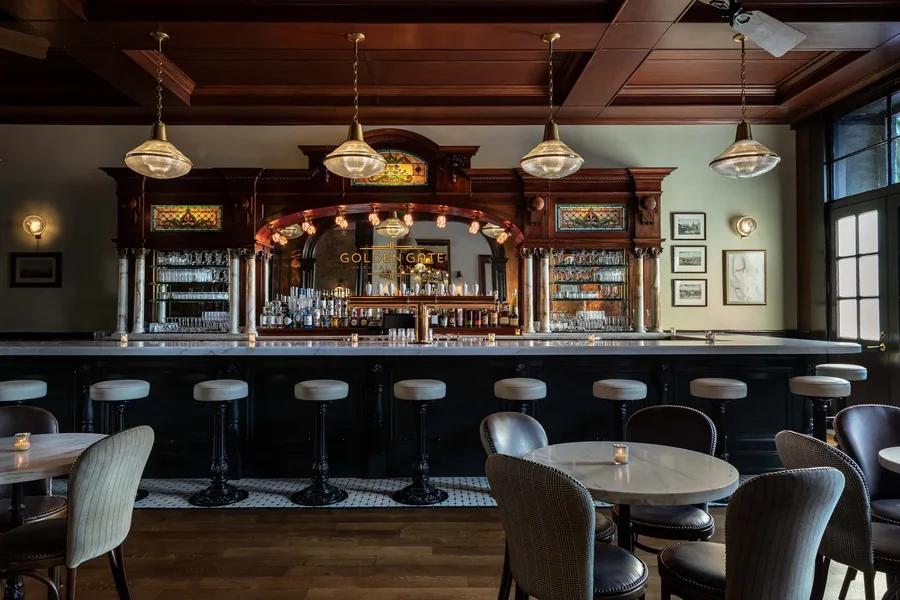
The Klondike link is more than a footnote. Dawson City, the heart of the gold rush, still celebrates its colourful past. Diamond Tooth Gertie’s, which opened in 1971 and is run by a local non-profit, is widely described as Canada’s oldest legal casino. Visitors during the summer season can watch can-can shows, step into a recreated 1890s saloon atmosphere and play at the same kinds of tables that entertained prospectors more than a century ago. Profits help fund community projects in the town, which gives a night out there a pleasantly old-fashioned feel.
The Professor Who Changed the Game
In 1962, an American mathematics professor named Edward O. Thorp published a book called Beat the Dealer. Using early computers, he showed that by keeping track of which cards had already been played, a skilled player could gain a small edge in certain situations. The idea of card counting was born, and casinos quickly responded by using multiple decks, shuffling more often and watching for players who seemed a little too good at arithmetic.
Thorp’s work turned blackjack into something more than a game of luck in the public imagination. It also inspired books, documentaries and films about teams of students trying to beat the house, which only added to its mystique.
Today, most venues use automatic shuffling machines or continuous shuffles, which make counting far less effective than it was in Thorp’s day.
Why People Still Love It
Blackjack has kept its popularity for several simple reasons:
- **It is quick to learn.** Most people understand the basics after a couple of rounds.
- **Every hand involves a decision.** Choosing whether to hit, stand, double down or split keeps players engaged.
- **The pace suits everyone.** Rounds are short, so the game fits a casual evening as well as a long session.
- **It is social.** Players share a table and often cheer each other on against the dealer.
Modern versions have added side bets, multi-hand options and live dealer streams, but the core of the game has barely changed in two hundred years.
Playing Sensibly
Like any game involving money, blackjack is best enjoyed with clear limits. Decide in advance how much you are happy to spend, treat that amount as the cost of entertainment and walk away when it is gone. Learning basic strategy can make the game more interesting, but no system removes the house edge entirely.
A Game That Keeps Reinventing Itself
From French drawing rooms to Yukon saloons and on to smartphones, twenty-one has proved remarkably adaptable. Each generation has found something new in it, whether that is the thrill of the frontier, the challenge of mathematics or simply the pleasure of a friendly game with good company. It is a story that shows how a handful of cards can carry centuries of history with them.